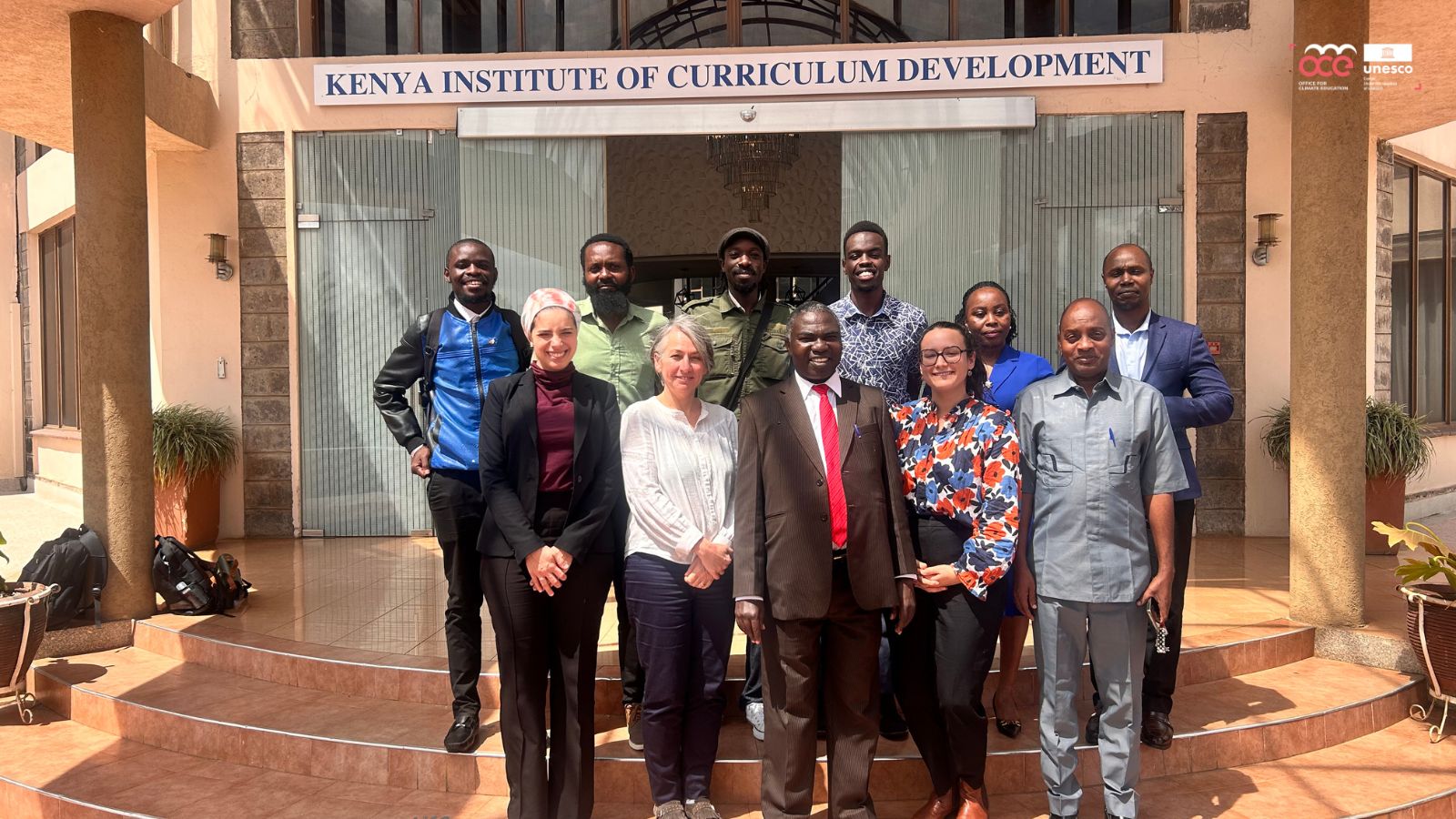
From 17 to 19 November 2025, representatives from the Office for Climate Education and the Kenya Organisation for Environmental Education (KOEE) met with strategic national and international partners, including the Kenya National Commission for UNESCO (KNATCOM), National Environment Management Authority (NEMA), French Embassy in Kenya, UNESCO Nairobi Office, Kenya Institute of Curriculum Development (KICD) and Siemens Stiftung (project partner). These meetings helped establish a shared vision for ARRICE in Kenya, clarify how national actors connect with the wider regional project, and ensure that activities in Kenya are aligned with both national priorities and ARRICE’s broader objectives across Africa.
Building on KOEE’s desk research and field studies on the current state of climate change education in Kenya, the discussions provided a space to align ARRICE’s approach, expected outputs, and implementation plan with Kenya’s education strategies, curriculum development pathways, and broader national vision. The exchanges also highlighted the importance of linking climate learning with local realities and ongoing reforms, so that future resources and training can support teachers effectively and contribute to lasting systemic change. In this regard, stakeholders were invited to join ARRICE’s National Committee to sustain regular collaboration and guide the project’s national relevance and scaling pathway.
Teacher Training Workshop
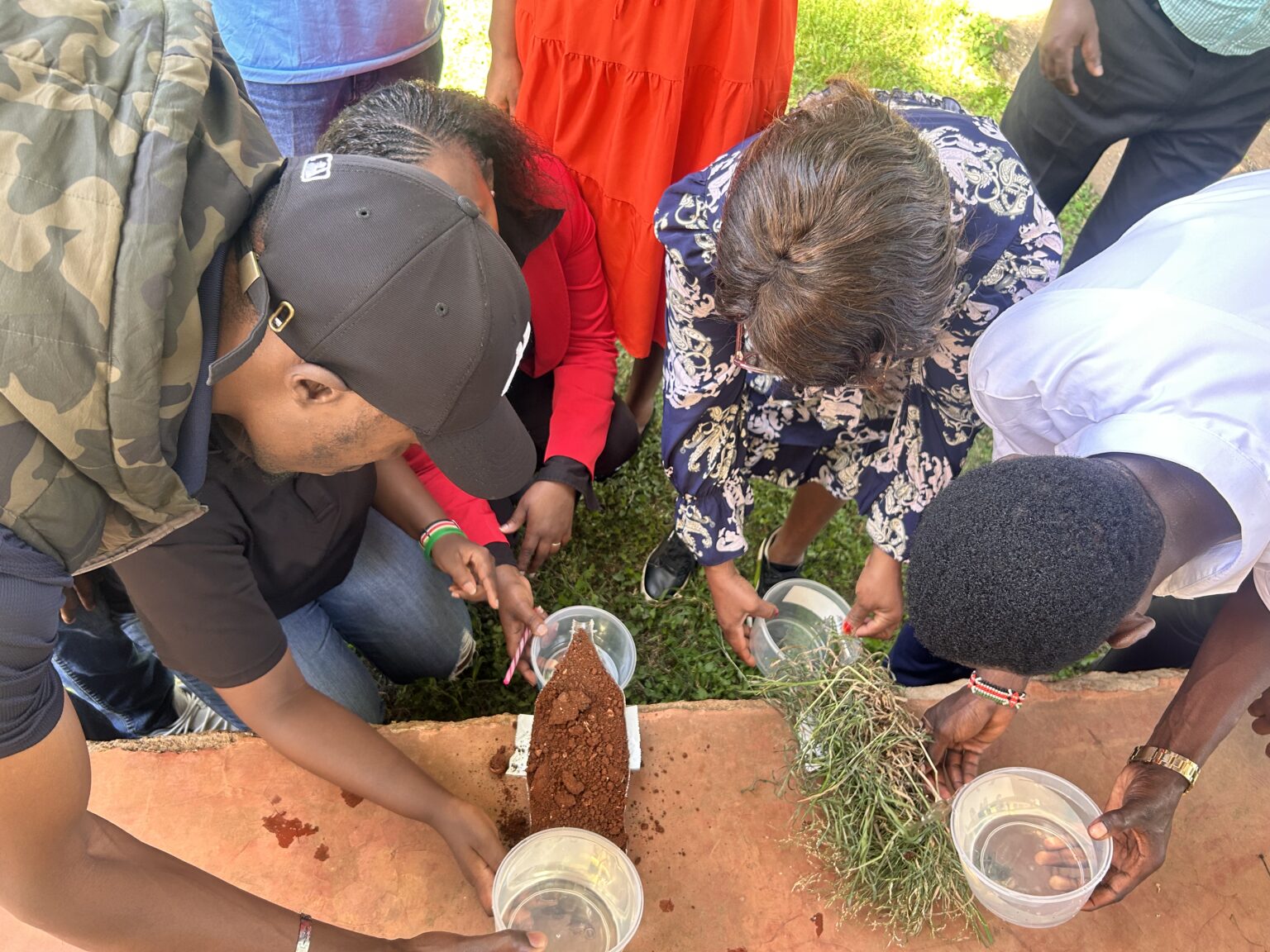
On 20–21 November, the Office for Climate Education, together with KOEE, delivered a two-day teacher training workshop in Nairobi, bringing together around 40 educators from across the country. Designed as a hands-on, inquiry-based training, the workshop combined experiments, role-plays, group discussions, and pedagogical debriefs. Teachers investigated key climate topics and classroom approaches, including:
- the greenhouse effect through simple experiments, model analysis and role-play to tackle common misconceptions;
- climate justice, using interactive activities to explore inequalities in emissions, impacts and responsibilities;
- eco-anxiety and emotions, to support constructive dialogue with students;
- ocean and cryosphere processes (thermal expansion, sea level rise, albedo…) via easy-to-replicate experiments;
- climate change and soils, with erosion and degradation models linking land use, ecosystems and resilience.
A focus was also placed on adapting OCE resources to the Kenyan curriculum and local realities: one of the key goals of the ARRICE project, which aims to adapt and co-create climate change education resources rooted in the Kenyan context. These sessions enabled participants to leave with practical, locally relevant activities and a strengthened peer network.
This event was an important milestone for ARRICE in Kenya, reinforcing a growing community of teachers equipped to address climate change in the classroom with confidence.
 KOEE
KOEE
Leave a Reply
Want to join the discussion?Feel free to contribute!